
Keynote Speakers

Assoc. Prof. Di Zou
The Hong Kong Polytechnic University
Prof. Zou Di is an Associate Professor in the Department of English and Communication and the Faculty of Humanities at The Hong Kong Polytechnic University. She holds a PhD in English from City University of Hong Kong and a TESOL certificate from Trinity College London. Her research expertise lies in educational technology, language education, computer-assisted language learning (CALL), game-based language learning, and artificial intelligence (AI) in language education. With a strong research focus on educational technology in language education, Professor Zou has led and collaborated on over 20 research projects. She has published more than 220 research papers, primarily in SSCI- and Scopus-indexed journals, including Computers & Education, British Journal of Educational Technology, Computer Assisted Language Learning, Language Learning & Technology, and Systems. Her work has had a significant impact in the field, with a Google Scholar citation count of 11939 (as of July 2025), an h-index of 52, and an i10-index of 107. She has been recognized as one of the World's Top 2% Scientists by Stanford University for four consecutive years (2021–2024). Several of her papers in Computers & Education and Computer Assisted Language Learning rank among the Most Cited Articles in their respective journals. Professor Zou's contributions to teaching and research have earned her numerous awards. She has received the Excellent Paper Award from the International Conference on Blended Learning and the International Conference on Open and Innovative Education. Her innovative teaching projects have been recognized internationally, winning the Gold Medal and Special Awards at the International Invention Innovation Competition in Canada (iCAN) and the Silver Medal at the International Innovation and Invention Competition (IIIC) in Taiwan. Beyond her research and teaching achievements, Professor Zou plays an active role in academic publishing. She serves as an Associate Editor for Computer & Education (SSCI IF=8.9), Computers & Education: X Reality, and previously for the Australasian Journal of Education Technology (SSCI IF=4.1) (2021–2022). She is also an editorial board member for Education Technology & Society (SSCI IF=4.7) and the International Journal of Mobile Learning and Organisation. Additionally, she has led special issues for several prestigious journals, including Computers in Human Behavior (SSCI IF=9.0), Systems (SSCI IF=4.9), Education Technology & Society (SSCI IF=4.7), and Computers & Education: Artificial Intelligence (Scopus CiteScore=16.8). Professor Zou’s extensive research, editorial contributions, and dedication to technological advancements in language education continue to shape the field and inspire scholars worldwide.

Assoc. Prof. Song-Kyoo (Amang) Kim
Macao Polytechnic University, China
Prof. Song-Kyoo (Amang) Kim (Senior Member, IEEE) received the M.S. degree in computer engineering and the Ph.D. degree in operations research from the Florida Institute of Technology, in 1999 and 2002, respectively. He is currently an Associate Professor of computing program with the Macao Polytechnic University. He used to be an Associate Professor of several United Arab Emirates universities. Before moving to the Gulf Region, he was a Core Faculty Member of the Asian Institute of Management, providing courses in technology, innovation, and operations. Before his academic career, he was a Technical Manager with the Mobile Communications Division, Samsung Electronics, for more than ten years and mainly dealt with technology management in the information technology industry. He has been an Invited Speaker at many international conferences concerning technology management, innovation process, operations research, and data sciences.

Prof. Li-fang Zhang
The University of Hong Kong
Li fang ZHANG is Professor of Psychology
and Education in the Faculty of Education at The
University of Hong Kong. She has been chairing the
University’s Human Research Ethics Committee since
2020, was Associate Dean (Research Higher Degrees)
(2007–2010), and led the Division of Learning,
Development, and Diversity (2013–2019).
A world-renowned authority on intellectual styles,
Professor Zhang has also conducted research and
published papers in other academic domains,
including giftedness, creativity, student
development in higher education, teacher education,
and the academic profession. Professor Zhang has
(co)authored nearly 160 peer reviewed international
journal and encyclopedic articles and has published
numerous academic book chapters and books, including
two single authored monographs with Cambridge
University Press – The Malleability of Intellectual
Styles (Zhang, 2013) and The Value of Intellectual
Styles (Zhang, 2017). She is editor in chief of the
Oxford Encyclopedia of Educational Psychology and an
associate editor of Educational Psychology. She also
serves as a consulting editor for the Journal of
Educational Psychology and sits on several editorial
boards in psychology and education, including
Educational Psychology Review and Thinking Skills
and Creativity. She has also served as an ad hoc
reviewer for over 50 peer-reviewed international
journals, including Cognition and Instruction,
European Journal of Personality, Higher Education,
Learning and Instruction, Learning and Individual
Differences, Personality and Individual Differences,
and Psychological Bulletin.
Invited Speaker
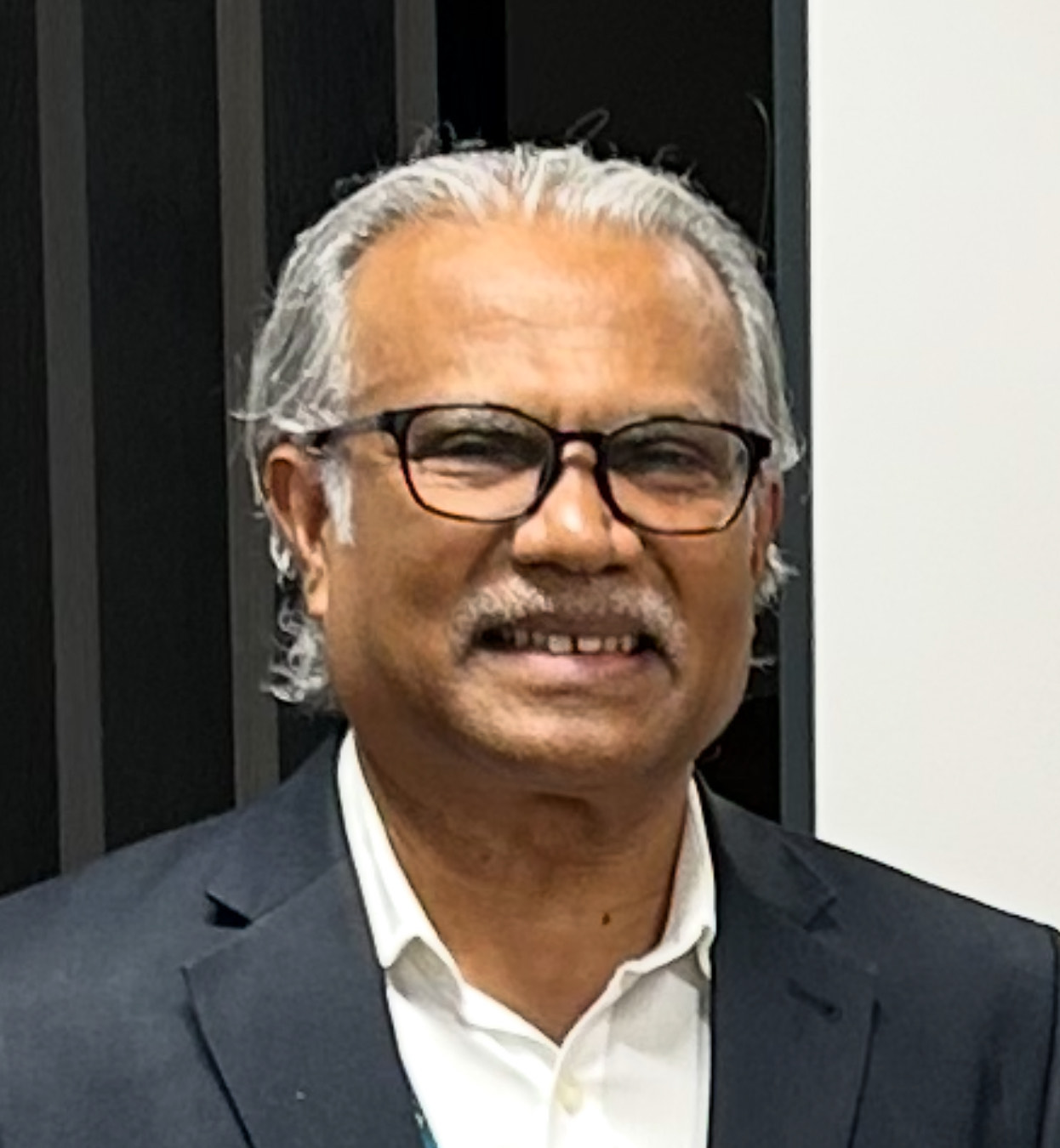
Dr. Mohamed Asim
Visiting Assistant Professor at Villa College, Maldives
Dr Asim holds a PhD from the Australian National University, Canberra where he researched on the application of TQM in public sector organisations. His Master's Degree is from the California State University Sacramento USA. Dr Asim served in London between 2022 to 2025 as a Senior Lecturer at the University of Wales Trinity Saint David London. In this capacity Dr Asim also headed the DBA program acting as Program Manager, and his responsibilities included teaching doctoral students and research supervision, convening examiners and Charing the viva voce. Dr Asim’s previous teaching experience was at the College of Technology London. Currently he is a Visiting Assistant Professor at Villa College in the Maldives where he teaches the MBA modules of the University of West of England – Bristol Business School.
Adoption of Digital Platforms and AI in the public sector: An Exploratory Study
Abstract:
Public sector organizations have traditionally been
viewed as lethargic in addressing the needs of
customers/citizens. Human intervention in the public
sector procurement processes leading to
irregularities and use of discretionary powers have
been identified as conventional aspects of public
sector organisations in a host of countries.
Interestingly, these irregularities have in fact
been the primary justification for the advocacy of
digital platforms and AI in public sector
institutions. This research hence is primarily
focused on two segments. The first is the review of
rhetoric presented by the public sector globally
and, the second segment focusses on views of public
sector officials and researchers in selected
countries to ascertain the uptake of digital
platforms. Because of the nature of this research, a
qualitative approach has been used, distributing
survey questionnaires though academic contacts in 6
countries in Europe, Africa and Asia. The findings
reflect the broad adoption digital platforms with a
focus on the use of widely available AI platforms. A
majority has adopted tailored applications for the
delivery of services such as education student loans
and e-commerce and public procurement. A majority
has responded positively to the questions of
improved speed, efficiency and accessibility of
services. Customers and service recipients have
expressed positive change. Much of the challenges
focussed on raising awareness and the need for AI
training, limited funding, and internet availability
and AI-digital skills gaps. An interesting finding
has been a response on lack of human contact
especially where public sector is involved. While AI
can improve efficiency and speed up services, some
citizens—especially older adults or those with
limited digital skills—still prefer speaking with a
real person. Complex or sensitive concerns also
often require empathy, judgment, and personalized
assistance that technology cannot fully replace. As
stated by one respondent “the challenge is finding
the right balance between automation and maintaining
accessible, human-centered public services".